
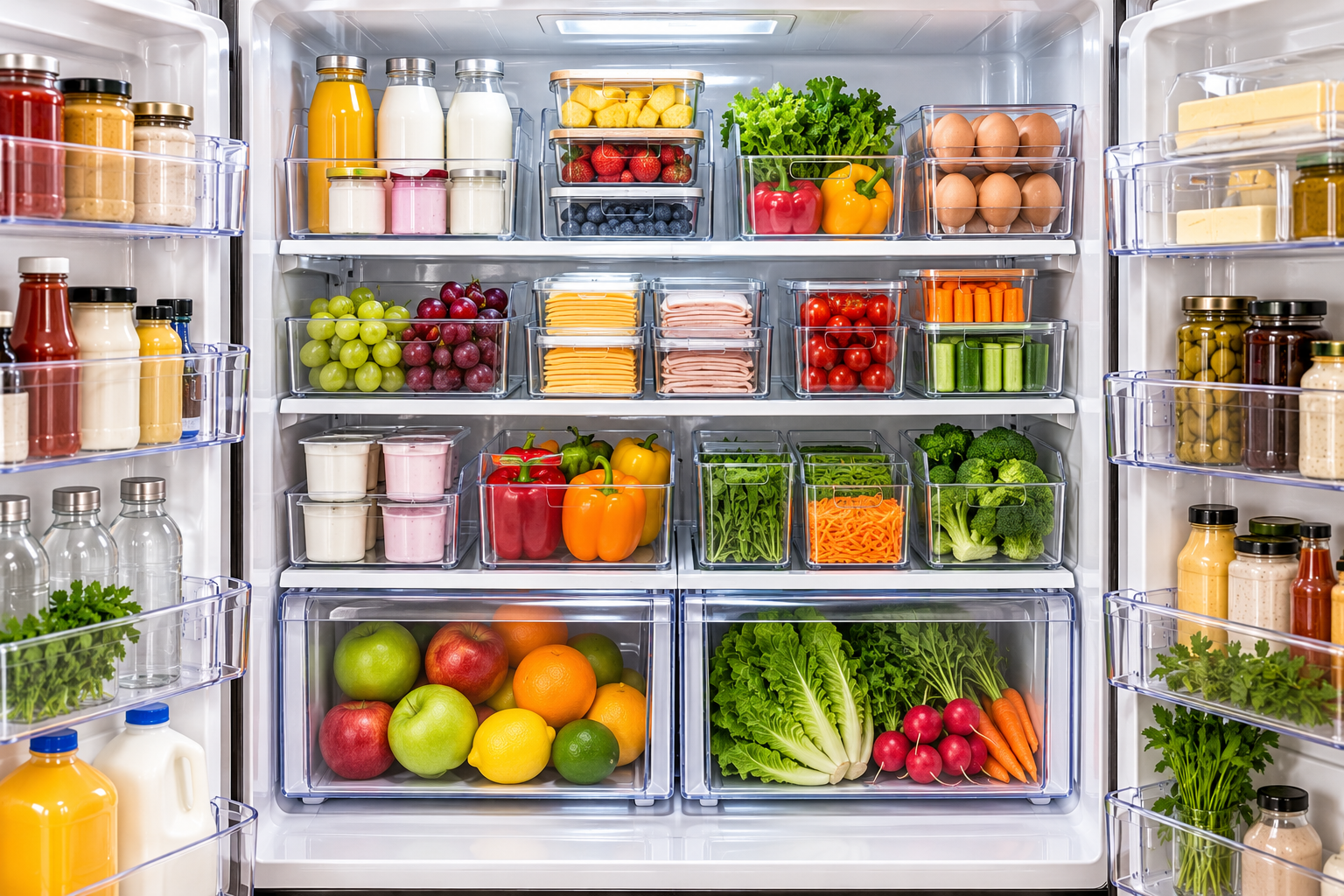
A well-organized refrigerator can make your kitchen feel cleaner, help you find ingredients faster, and reduce food waste. If your fridge is constantly crowded with leftovers, misplaced groceries, forgotten produce, and half-empty containers, a few simple changes can make a big difference.
Learning how to organize fridge shelves doesn’t require an expensive refrigerator makeover or a collection of matching containers. With the right refrigerator organization ideas, smart storage zones, and a simple weekly routine, you can create a neat, functional fridge that keeps food visible and easier to manage.
Whether you’re looking for small fridge organization ideas, practical food storage tips, or ways to maximize refrigerator space, this guide will show you how to organize your fridge shelf by shelf.
1. Empty Your Fridge and Start With a Clean Slate

The first step in refrigerator organization is to remove the clutter. Trying to organize around expired food, sticky spills, and crowded containers will only make the process harder.
Start by taking everything out of the refrigerator. Check food labels, inspect leftovers, and discard items that are spoiled or no longer safe to eat. Place perishable food in a cooler while cleaning if necessary.
Wipe the shelves, drawers, and door compartments with warm, soapy water, then dry them thoroughly. Clean spills immediately in the future to keep your fridge fresh and hygienic.
Pro tip: Organize one section at a time if you have a large amount of food to put away. This helps prevent perishable groceries from staying at room temperature for too long.
2. Assign Every Fridge Shelf a Purpose

One of the most effective fridge organization hacks is to give every shelf and compartment a specific purpose. When similar foods stay together, you can quickly see what you have and avoid buying duplicates.
Use this refrigerator shelf organization guide as a starting point, adjusting it to your appliance’s design and temperature patterns.
Top shelf: Ready-to-eat foods
Store covered leftovers, prepared meals, and foods that don’t require cooking before eating. Keep food in clear containers so you can see what needs to be used.
Middle shelves: Dairy and everyday essentials
Group yogurt, cheese, and other frequently used dairy products together. Store eggs in their original carton inside the refrigerator rather than in the door.
Bottom shelf: Raw meat and seafood
Keep raw meat, poultry, and seafood in sealed, leakproof containers on the lowest shelf to prevent juices from dripping onto other foods. Follow package instructions and safe storage times.
Crisper drawers: Fruits and vegetables
Use separate drawers when possible. Follow the refrigerator’s humidity settings and the storage needs of individual produce items to help preserve freshness.
Door shelves: Condiments and suitable drinks
Store sauces, dressings, and other products that tolerate the temperature fluctuations of the door. Avoid storing highly perishable foods here.
Food safety note: This is a practical organizing layout, not a guarantee that every refrigerator has identical temperature zones. Keep the refrigerator at or below 40°F (4°C) and follow your appliance and food packaging instructions.
3. Use Clear Fridge Organizer Bins to Maximize Space

Clear fridge organizer bins are a popular way to create a tidy refrigerator without making it difficult to access everyday ingredients. They help group similar products together and prevent small items from getting lost behind larger containers.
You don’t need to purchase an entire refrigerator organization set. Start with a few practical containers that fit your shelves.
- Snack bin: Keep individually packaged snacks and ready-to-eat items together.
- Dairy bin: Group yogurt cups, cheese portions, and similar products.
- Leftover bin: Keep covered leftover containers in one visible area.
- Produce bin: Organize suitable produce that benefits from being grouped together.
- Condiment organizer: Use a small, refrigerator-safe turntable for jars and bottles if space allows.
Choose clear, food-safe containers that fit your refrigerator. Avoid overfilling bins, blocking air vents, or using organizers that prevent shelves from fitting correctly.
Budget-friendly tip: Repurpose clean, food-safe containers you already own instead of buying matching accessories just for aesthetics.
4. Create an “Eat First” Fridge Organization Zone
One of the smartest refrigerator organization ideas is to create an eat-first zone. This is a designated spot for leftovers and foods that need to be used soon.
Without a system, leftover pasta, opened ingredients, and ripe produce can disappear behind new groceries. Eventually, you may forget about them and throw them away.
To make this system work:
- Choose a clearly visible shelf area or a dedicated bin.
- Place properly stored leftovers and opened products there when appropriate.
- Label containers with the preparation or opening date.
- Check the area before planning meals or writing your grocery list.
- Move older items forward when adding newer groceries, while following food safety guidance.
This simple habit can make meal planning easier and help you reduce food waste. However, always follow recommended storage times; a food’s appearance or smell alone cannot establish that it is safe to eat.
5. Organize Refrigerator Drawers for Fresher Produce
Refrigerator drawers can quickly become cluttered when fruits and vegetables are mixed together without a plan. A better system makes produce easier to find and helps you use ingredients before they deteriorate.

Try these fridge drawer organization tips:
- Group similar vegetables together so you can see what you have.
- Separate fruits and vegetables when practical, because some fruits release ethylene gas that speeds up ripening in sensitive produce.
- Follow the recommended humidity settings for your refrigerator’s crisper drawers.
- Store produce according to its specific needs rather than washing everything in advance.
- Keep delicate leafy greens protected from excess moisture and remove damaged leaves when appropriate.
For example, you might use one drawer for leafy greens and vegetables and another for fruit. Adjust the arrangement to suit your family’s shopping habits and the produce you use most often.
The goal is to make fresh ingredients visible and accessible, not to create a complicated storage system.
6. Arrange Fridge Items by Size and Frequency of Use
A crowded refrigerator often becomes disorganized because large containers hide smaller items. Smart placement can make even a small refrigerator feel more spacious.
Place taller bottles where they fit comfortably without blocking other items. Group small jars together, and position frequently used ingredients where they are easy to reach. Keep food in suitable, covered containers and avoid stacking containers so high that you cannot see what’s behind them.
If your refrigerator has adjustable shelves, change their heights to accommodate your usual groceries. Leave enough space for cold air to circulate, and avoid blocking vents.
These simple changes are especially helpful if you’re searching for small fridge organization ideas or ways to organize a refrigerator with limited shelf space.
7. Keep Your Fridge Smelling Fresh
A beautifully organized fridge should also smell clean. Lingering odors often come from spills, forgotten leftovers, uncovered food, or spoiled produce.
Maintain a fresh refrigerator by following these habits:
- Wipe up spills as soon as they happen.
- Store food in covered containers or sealed packaging.
- Remove spoiled food promptly.
- Clean shelves and drawers regularly.
- Check leftovers and opened products during your weekly fridge reset.
- Consider an opened box of baking soda to help absorb odors, replacing it according to the product instructions.
Avoid using strong cleaning chemicals that could leave residues on food-contact surfaces. Follow your refrigerator manufacturer’s cleaning recommendations.
8. Maintain Your Fridge Organization With a Weekly Reset
The secret to long-lasting fridge organization isn’t perfection. It’s having a simple routine you can repeat every week.

Choose a regular day to check your refrigerator before grocery shopping. Remove spoiled food, wipe up any spills, check dates, and move foods that need to be used soon into your eat-first area.
Before buying more groceries, check what you already have. You may discover ingredients for several meals without needing an additional shopping trip.
A simple weekly routine could look like this:
Check the shelves
Remove spoiled food and identify items that need to be used soon.
Clean problem areas
Wipe spills, clean sticky containers, and keep shelves hygienic.
Plan meals around existing food
Use available ingredients before purchasing replacements.
Return everything to its zone
Keep your shelf categories consistent and leave room for new groceries.
Common Fridge Organization Mistakes to Avoid
Even with the best refrigerator organization hacks, a few habits can make your system difficult to maintain.
Overcrowding shelves: Too much food makes it difficult for cold air to circulate and hides ingredients at the back.
Putting everything in containers: Containers can improve visibility and cleanliness, but excessive bins waste valuable space. Use only what you need.
Storing eggs in the door: Temperature fluctuations make the door less suitable for eggs. Keep them in their carton inside the refrigerator.
Ignoring food safety: An attractive arrangement is not enough. Keep raw meat separate from ready-to-eat foods, cover leftovers, and maintain the recommended temperature.
Forgetting leftovers: Create a visible eat-first zone and check it regularly.
Organizing once and never maintaining it: A quick weekly reset is more practical than repeatedly reorganizing the entire refrigerator.
Frequently Asked Questions
What is the best way to organize fridge shelves?
Group foods by their storage needs and frequency of use. Keep ready-to-eat foods separate from raw meat, use crisper drawers appropriately, reserve door shelves for suitable condiments, and keep the refrigerator at or below 40°F (4°C).
How do I organize a small fridge with limited space?
Use a few compact clear bins, adjust removable shelves, group similar items, and keep frequently used products visible. Avoid oversized organizers and leave room for air circulation.
Are refrigerator organizer bins worth it?
They can be helpful for grouping small products, containing minor spills, and making food easier to find. Choose food-safe bins that fit your refrigerator and are easy to clean.
How often should I clean and organize my refrigerator?
Check your fridge weekly for spoiled food, aging leftovers, and spills. Clean individual messes immediately and perform a more thorough cleaning whenever needed.
What temperature should a refrigerator be?
Keep your refrigerator at or below 40°F (4°C). An appliance thermometer can help you verify the actual temperature.
Final Thoughts
Learning how to organize fridge shelves is a simple DIY home improvement project that can make everyday kitchen routines easier. By assigning shelves a purpose, using a few practical organizer bins, creating an eat-first zone, and maintaining a weekly reset, you can enjoy a cleaner and more functional refrigerator.
You don’t need expensive products or a picture-perfect setup. Start with the food you already have, create a layout that works for your household, and build small habits that keep clutter under control.
A well-organized fridge can help you save time, plan meals more easily, and make better use of the groceries you buy.
-
How to Make Ordinary Vases Look Like Expensive Stoneware:
How to Make Ordinary Vases Look Like Expensive Stoneware: Easy DIY Guide Have you ever seen beautiful stoneware vases in a home decor store and wished you could recreate the same look without paying designer prices? The good news is that you can transform ordinary glass, ceramic, or thrifted vases into stylish decorative pieces using […]
-
10 DIY Fluted Wall Ideas for a Modern Home
If you want to make your home look more modern without spending thousands of dollars on renovations, a DIY fluted wall is a great place to start. Fluted walls feature narrow vertical grooves or raised ridges that add texture, depth, and visual interest to an otherwise plain surface. This popular interior design trend works beautifully […]
-
How to Color Drench a Room on a Budget:
An Easy DIY Guide Color drenching is one of the easiest ways to transform a room without spending a fortune on furniture, decorations, or expensive renovations. This interior design trend creates a cohesive, stylish look by using the same color or different shades of the same color across walls, ceilings, trim, and sometimes furniture. The […]
-
DIY Accent Wall Ideas That Transform Any Room
Have you ever walked into a room and felt that something was missing, even though the furniture and decor looked nice? Sometimes, all a space needs is one eye-catching wall to bring everything together. An accent wall can add color, texture, warmth, and personality without requiring a complete room makeover. Whether you want to create […]
-
Simple DIY Exterior Home Improvements to Boost Curb Appeal
The outside of your home creates the first impression for visitors, neighbors, and anyone passing by. Fortunately, you don’t need an expensive renovation to make your property look more attractive. A few simple updates can transform a tired exterior into a welcoming space that feels clean, fresh, and well maintained. From refreshing your front door […]
-
Smart DIY Storage Ideas for Small Homes
Living in a small home doesn’t mean you have to live with clutter. With the right storage solutions, even a tiny apartment, compact bedroom, or small living room can feel organized, comfortable, and spacious. The secret is to make better use of the space you already have. Instead of adding bulky furniture or spending money […]


Leave a Reply