
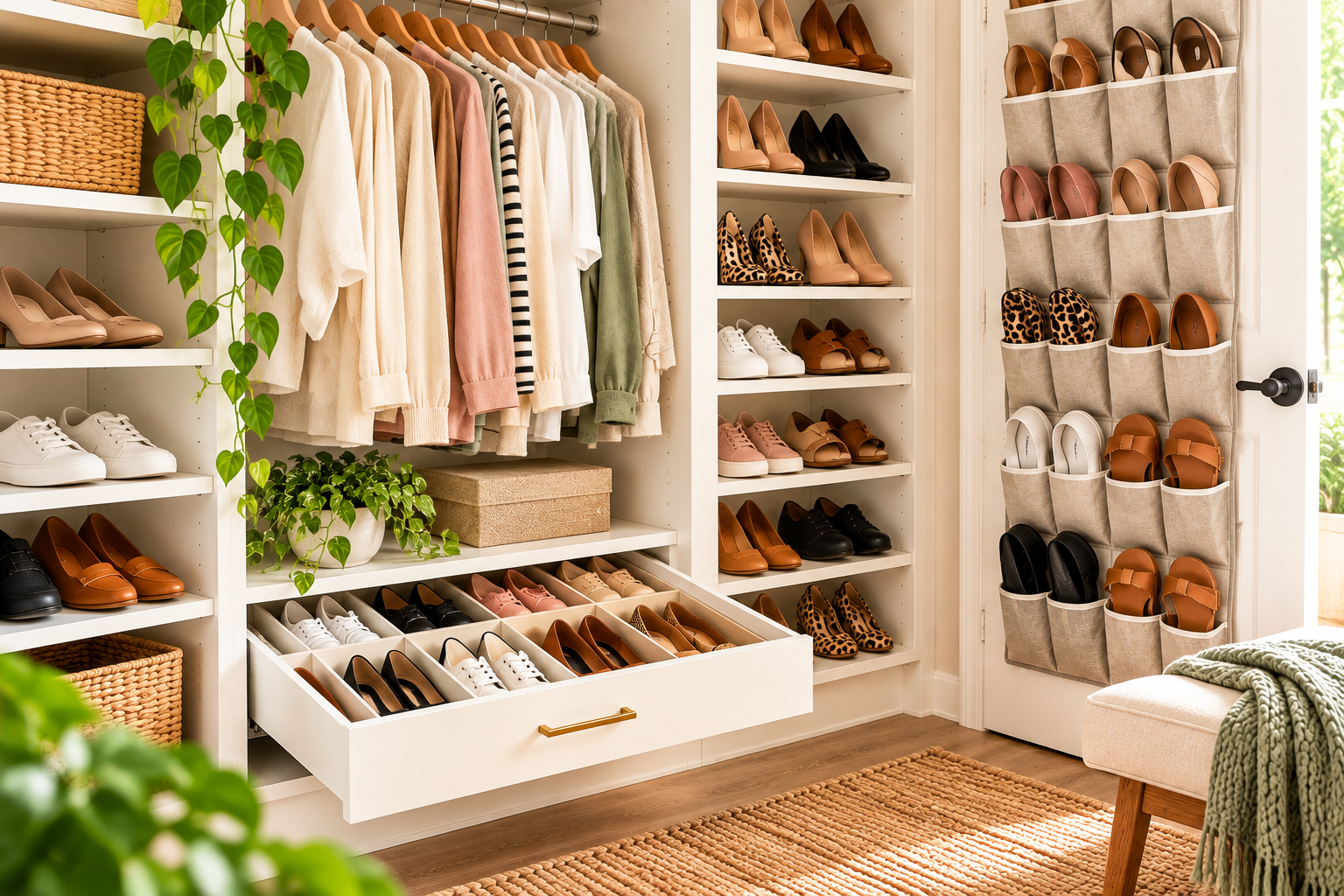
Easy Tricks to Keep Shoes Neat
Shoes can quickly take over your closet, making it difficult to find the right pair and keep your bedroom looking tidy. Sneakers, sandals, boots, heels, and everyday footwear can create clutter when they are scattered across the floor or piled into a crowded corner. Fortunately, the right closet shoe organizer ideas can help you maximize storage space, protect your footwear, and create a neat, organized closet without spending a fortune.
Whether you have a small bedroom closet, a walk-in wardrobe, or limited storage space in a rental home, there are plenty of practical ways to organize your shoes. From affordable shoe racks and clear storage boxes to vertical organizers and clever DIY solutions, you can create a system that fits your space and budget.
In this guide, you will discover easy shoe storage ideas, smart closet organization tips, and budget-friendly solutions to help you keep every pair accessible and your home clutter-free.
Why You Need a Closet Shoe Organizer
A closet shoe organizer helps you store footwear neatly while making better use of the available space. Instead of leaving shoes scattered across the floor, you can arrange them in a designated area where they are easier to see and retrieve.
Organized shoe storage also helps protect footwear from dust, scratches, and unnecessary wear. When shoes are stored properly, it becomes easier to identify pairs that need cleaning, repair, or replacement.
A practical shoe organization system can also save time when getting dressed. You will spend less time searching for matching pairs and more time enjoying a clean, functional bedroom.
The best shoe organizer for your closet depends on the number of pairs you own, the type of footwear you wear, and the amount of space available.
Choose a Shoe Rack to Keep Your Closet Tidy
A shoe rack is one of the simplest and most effective closet shoe organizer solutions. It creates a designated place for footwear and helps prevent shoes from accumulating on the floor.
A compact shoe rack works well in small closets, while a wider rack may be suitable for larger wardrobes or walk-in closets.
Choose a rack that fits comfortably inside your closet without blocking doors, drawers, or access to hanging clothes. Measure the available space before purchasing one to avoid choosing a unit that is too large.
Arrange your most frequently worn shoes on the easiest-to-reach shelves. Less frequently used footwear can be placed on higher or lower levels, provided it remains accessible.
For a neat appearance, position shoes consistently and keep pairs together. This simple arrangement makes your closet easier to maintain and helps you find the footwear you need quickly.
Use Clear Shoe Storage Boxes for Easy Access
Clear shoe storage boxes are ideal for people who want to protect their footwear while keeping every pair easy to identify.
Unlike opaque containers, transparent boxes allow you to see the contents without opening each one. This can be especially helpful when storing multiple pairs of similar-looking shoes.
Choose boxes that fit your shelves and provide enough room for the footwear without forcing it into an unsuitable position. Stackable designs can help maximize vertical storage, provided they are stable and intended for stacking.
You can also reuse suitable shoe boxes and add labels or photographs to identify each pair.
Before placing shoes in storage, clean them and allow them to dry completely. Avoid sealing damp footwear inside containers because trapped moisture can contribute to unpleasant odors and material damage.
Clear shoe boxes are a practical option for keeping seasonal footwear, special-occasion shoes, and less frequently worn pairs organized.
Maximize Vertical Space With a Shoe Organizer
When floor space is limited, vertical shoe storage can help you organize more footwear without taking up additional room.
A tall shoe rack, stackable shelves, or a suitable hanging organizer can make use of the space above or around your existing storage area.
Vertical organizers are particularly useful in small bedroom closets where there is little room for additional furniture.
Before choosing a tall storage unit, check the available height and make sure the organizer can be installed or positioned securely. Keep heavier shoes on lower shelves and avoid creating unstable stacks.
For closets with adjustable shelving, consider repositioning shelves to accommodate different types of footwear. Flats and sandals need less vertical clearance than boots or high-top sneakers.
Using vertical space effectively can help you keep shoes organized while leaving more room for clothing and other belongings.
Organize Shoes With an Over-the-Door Organizer
An over-the-door shoe organizer is a useful option when your closet has limited shelf and floor space.
These organizers typically contain individual pockets or compartments that can hold suitable lightweight footwear and accessories. They can also be used for sandals, slippers, or other small items, depending on the design.
Before buying one, check the door dimensions, the organizer’s capacity, and whether the door can still open and close comfortably.
Some designs use clear pockets, making it easier to identify the shoes inside. Others use fabric compartments that conceal the contents and create a cleaner appearance.
Avoid placing heavy boots or oversized shoes in pockets that are not designed to support them.
If you rent your home, an over-the-door organizer can be a convenient alternative to installing permanent shelving, provided it does not damage the door or interfere with its operation.
Create a Separate Storage Area for Boots
Boots can be difficult to organize because they take up more vertical space than most everyday shoes.
Instead of placing them in a crowded shoe rack, create a dedicated area where they can stand upright without being crushed by other footwear.
A lower closet shelf may provide enough clearance for ankle boots, while taller boots may need a separate section or a suitable storage box.
Boot supports can help certain styles maintain their shape. For soft boots, follow the manufacturer’s care recommendations and avoid folding them in ways that create permanent creases.
Make sure boots are clean and dry before storing them. If they become wet, allow them to dry thoroughly in an appropriate ventilated area before returning them to the closet.
Keeping boots separate from smaller shoes helps prevent clutter and makes it easier to find the right pair when the weather changes.
Arrange Shoes by Type and Frequency of Use
One of the easiest shoe organization ideas is to group footwear according to its purpose.
Keep everyday sneakers, work shoes, and frequently worn sandals in the most accessible part of your closet. Store formal shoes, special-occasion heels, and seasonal footwear in less prominent areas.
You can also arrange shoes by color if you prefer a coordinated closet. Grouping similar styles together makes it easier to compare options and select a pair that matches your outfit.
If several people share the same closet, consider giving each person a designated shelf or storage section.
Avoid storing footwear that you no longer wear simply because you have room for it. Donate suitable pairs, sell unwanted footwear in good condition, or recycle materials where appropriate.
A clear organization system helps you make the most of your storage space and prevents shoes from becoming mixed together.
Try Under-Bed Shoe Storage for Small Closets

If your closet is too small to accommodate all your footwear, the area beneath your bed may provide additional storage.
Under-bed shoe organizers can hold seasonal shoes, spare sneakers, sandals, and other pairs you do not need every day.
Choose shallow containers that fit comfortably beneath the bed and can be pulled out without difficulty. Rolling designs may make access easier, especially when the bed frame has limited clearance.
Clear containers or labeled boxes help you identify stored footwear without opening every container.
Before storing shoes, clean them and ensure they are completely dry. Choose a storage solution that protects them from dust while avoiding trapped moisture.
Keep frequently worn shoes in your main closet and reserve under-bed storage for occasional-use pairs.
This approach can free up valuable closet space without requiring additional furniture.
DIY Shoe Storage Ideas on a Budget
You do not need to purchase an expensive shoe storage system to organize your closet. A few affordable DIY solutions can help you make better use of the space you already have.
Repurpose suitable shelves or small bookcases as shoe racks, provided they are stable and have enough room for your footwear. Reuse shoe boxes and label them clearly, or use suitable baskets to group sandals and slippers.
If your closet has adjustable shelves, rearranging their height may create additional room for different shoe styles.
A small bench with built-in storage can also work well near a bedroom entrance, especially if you want a convenient place to sit while putting on shoes.
Before purchasing new storage products, measure the available space and identify which problem you need to solve. A simple shelf or reused container may be enough.
Budget-friendly shoe storage works best when it improves accessibility without creating more clutter.
Keep White Sneakers and Delicate Shoes Protected

Some footwear needs additional care to maintain its appearance.
White sneakers can become dirty when they are stored on dusty closet floors, while delicate heels and special-occasion shoes may be scratched when they are piled together.
Store clean footwear on shelves or in suitable containers that protect it from dust and accidental damage. Keep delicate pairs separate from shoes with rough soles, buckles, or decorative details that could cause scratches.
Use shoe bags when appropriate, particularly for travel or seasonal storage. Avoid storing shoes in direct sunlight or damp locations where their materials may deteriorate.
For leather footwear, follow the manufacturer’s care instructions and use suitable cleaning and conditioning products when recommended.
A little extra attention can help preserve your favorite shoes and reduce the need for premature replacement.
Make Your Shoe Closet Look Beautiful and Organized
A tidy shoe closet can improve the appearance of your entire bedroom. You do not need matching designer storage products to create a polished look.
Start by keeping pairs aligned and arranging shoes consistently on each shelf. Use matching boxes or baskets if you prefer a coordinated appearance, and label containers where the contents are not visible.
Keep the closet floor clear and avoid placing unrelated belongings in the shoe storage area.
If your closet is dark, suitable closet lighting can make it easier to identify footwear. Choose lighting designed for the intended location and follow the manufacturer’s installation and safety instructions.
You can also coordinate the arrangement by color or shoe type to create a visually appealing display.
The key is to balance appearance with practicality. Your shoe closet should look neat while allowing you to find and return footwear without unnecessary effort.
Common Shoe Storage Mistakes to Avoid
One common mistake is overcrowding shelves. When shoes are squeezed together, they become harder to retrieve and may rub against one another.
Another mistake is storing footwear before it has dried completely. Trapped moisture can contribute to odors and damage certain materials.
Avoid choosing a shoe organizer before measuring your closet. A rack that is too deep may block access to other belongings, while a tall unit may become unstable if it is not properly supported.
Do not stack heavy shoes on top of delicate pairs, and avoid placing footwear in containers that are too small.
Finally, remember that storage alone will not solve an overcrowded closet. Review your collection regularly and remove pairs you no longer use.
Choosing the right storage system and maintaining simple habits can help prevent clutter from returning.
How to Maintain an Organized Shoe Closet
Once your shoe storage system is in place, simple habits can keep it organized.
Return shoes to their designated locations after wearing them. Clean dirty footwear before putting it away, and allow damp shoes to dry thoroughly.
Check your shoe collection periodically to identify pairs that need repairs or cleaning. Review seasonal footwear when the weather changes and move less frequently used pairs into suitable storage.
Wipe shelves and clean storage containers when necessary. If you notice persistent odors or signs of moisture, investigate the cause rather than simply hiding the problem.
When purchasing new shoes, consider whether you have enough room to store them properly.
A simple, consistent routine helps maintain an organized closet without requiring frequent, time-consuming reorganizations.

Organized Shoe Closet
Final Thoughts
Keeping your footwear organized does not require a large closet or an expensive storage system. With the right closet shoe organizer, you can make better use of vertical space, protect your favorite shoes, and keep your bedroom looking neat.
Start by decluttering your footwear collection, measuring the available space, and choosing a storage solution that suits your needs. Shoe racks, clear boxes, over-the-door organizers, and under-bed containers can all provide useful storage when selected carefully.
Remember to keep frequently worn pairs accessible, store shoes only when they are clean and dry, and maintain a simple organization routine.
With a little planning and a few practical changes, you can transform a cluttered shoe collection into a tidy, accessible storage system that makes getting ready easier every day.
Leave a Reply