
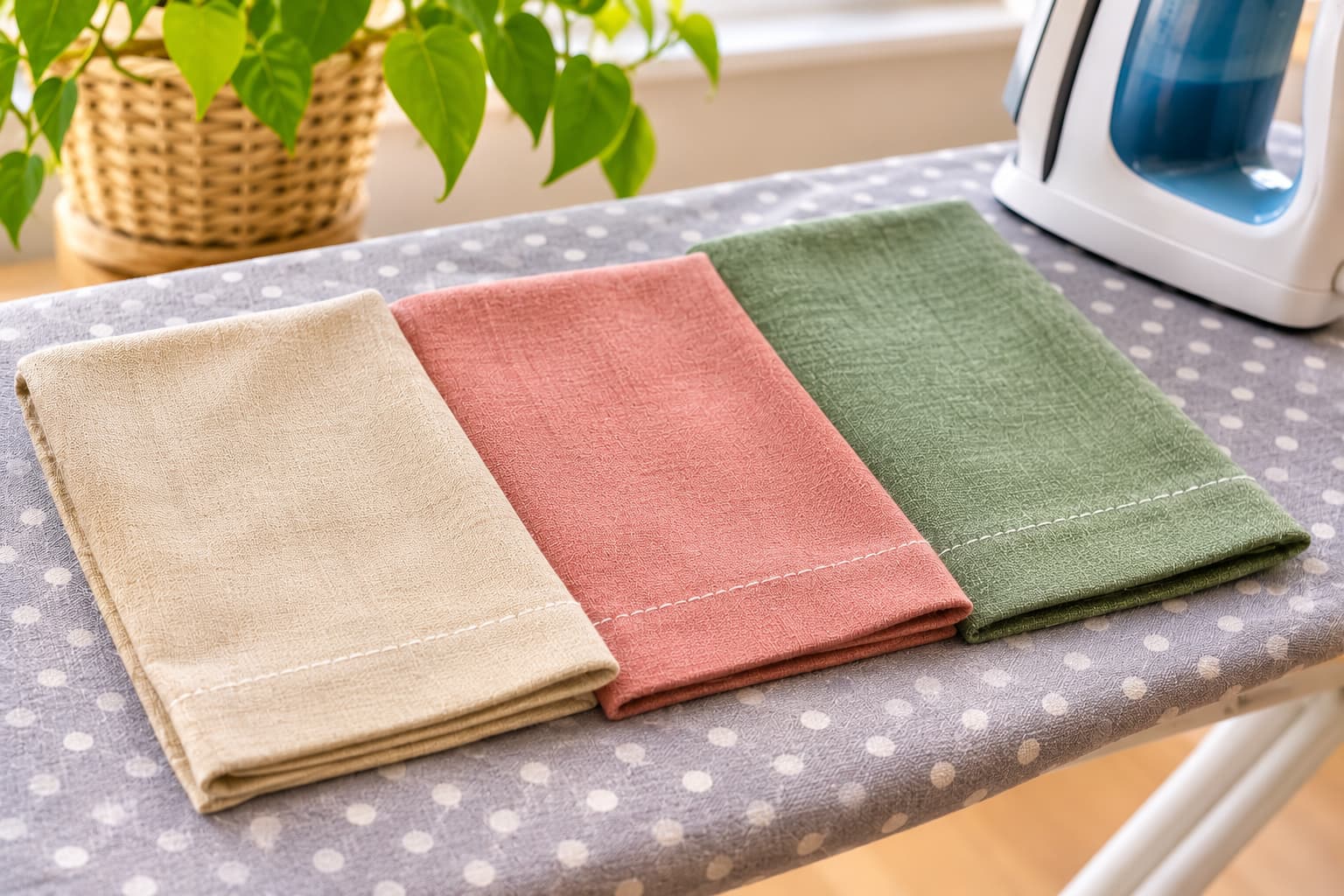
Summary: three tapes, one fabric, five washes. The cheapest tape lasted as long as the most expensive one, but only if I used it a certain way. Total spent on the test: 14.30 dollars.

I keep recommending iron-on hemming tape for no-sew curtains, and I realized I had never checked whether it holds up. Package claims are easy to make. So I ran a simple test: the same fabric, the same iron, and three different tapes, washed five times each.
The setup
I used a plain cotton sheet that I had already washed and dried, cut into three strips of equal size, about 12 inches wide and 20 inches long. I folded the bottom edge of each strip up by one inch and pressed it flat, then applied one tape per strip. I labeled the strips with a small safety pin and a scrap of paper so I would not mix them up.
Tape A was a cheap roll from a discount store, 2.25 dollars for about 5 meters. Tape B was a mid-priced roll from a craft shop, 4.80 dollars for about 5 meters. Tape C was a fusible web sold by the meter at a fabric store, 7.25 dollars for 5 meters. Total, 14.30 dollars.

How easy each was to apply
Tape A was the thinnest and the stickiest. It stuck to my fingers and to the iron plate, and the first strip came out with a small wrinkle because I pressed too long. After that I covered the tape with a thin cloth while ironing, and the result was fine.
Tape B was the easiest. It was slightly stiff, stayed in place without pinning, and the instructions on the pack were clear. It took about four minutes to hem the whole strip.
Tape C needed the most attention. It came as a loose web, so it shifted when I placed it, and I pinned it every few inches. The finished hem felt the softest of the three, though, with almost no stiffness along the edge.
The iron setting mattered more than the brand. I used a medium-high setting with steam off for all three, and I held the iron in place for about ten seconds per section instead of sliding it. When I slid it, the tape sometimes moved and left gaps.
The wash test
After hemming, I let each strip cool for a full day. Then I washed all three together in a normal cycle at 30 degrees Celsius, hung them to dry, and photographed the edges after the first, third, and fifth wash.
After wash one, all three hems looked identical and felt firm.
After wash three, Tape A had a small lifted patch about an inch long near one corner. Tape B and Tape C were unchanged.
After wash five, Tape A had lifted in two places, about three inches in total, and the edge flipped open when I gently tugged it. Tape B had one tiny lifted spot at the very end of the strip, less than half an inch. Tape C was still fully attached, although the fabric near the hem felt slightly more stiff than before.

What I learned about the failures
The lifted spots on Tape A and B were both on the ends of the strips, where I had cut through the tape and the glue was thinnest. On Tape A, the lifted patch near the corner also happened where I had pressed for less time. So the main lesson was to press every section for the full ten seconds and to overlap the tape at the corners.
I also noticed that all of the tapes held better on the cotton than on a scrap of thin polyester I tried at the end. On polyester, the same tape slid off after two washes. If your curtains are polyester, I would choose sewing or a different method.
The cost per meter
Tape A, 0.45 dollars per meter
Tape B, 0.96 dollars per meter
Tape C, 1.45 dollars per meter
For a pair of curtain panels needing about 8 meters of hem, that works out to roughly 3.60 dollars with Tape A, 7.68 dollars with Tape B, and 11.60 dollars with Tape C.
Which one I would pick
For curtains that will be washed rarely, I would use Tape A and press carefully. It is cheap, and the failure was small. For everyday items like cafe curtains or kitchen towels that get washed often, I would pay for Tape B. Tape C was the most durable, but the extra cost and the fiddly application make it more than most people need.
What I would change in this test
I would test more washes, because five is not very many. I would also test a heavier fabric, since a thick curtain pulls on the hem harder than a sheet does. And I would hem a second strip with each tape and wash them hot, because many people do that without thinking.
Final thoughts
Iron-on tape is not a miracle, but it works if you press properly, cover the tape, and choose the right fabric. For a small project like a curtain, it is a good way to avoid sewing, as long as you accept that it may need a touch-up after many washes.


Leave a Reply