
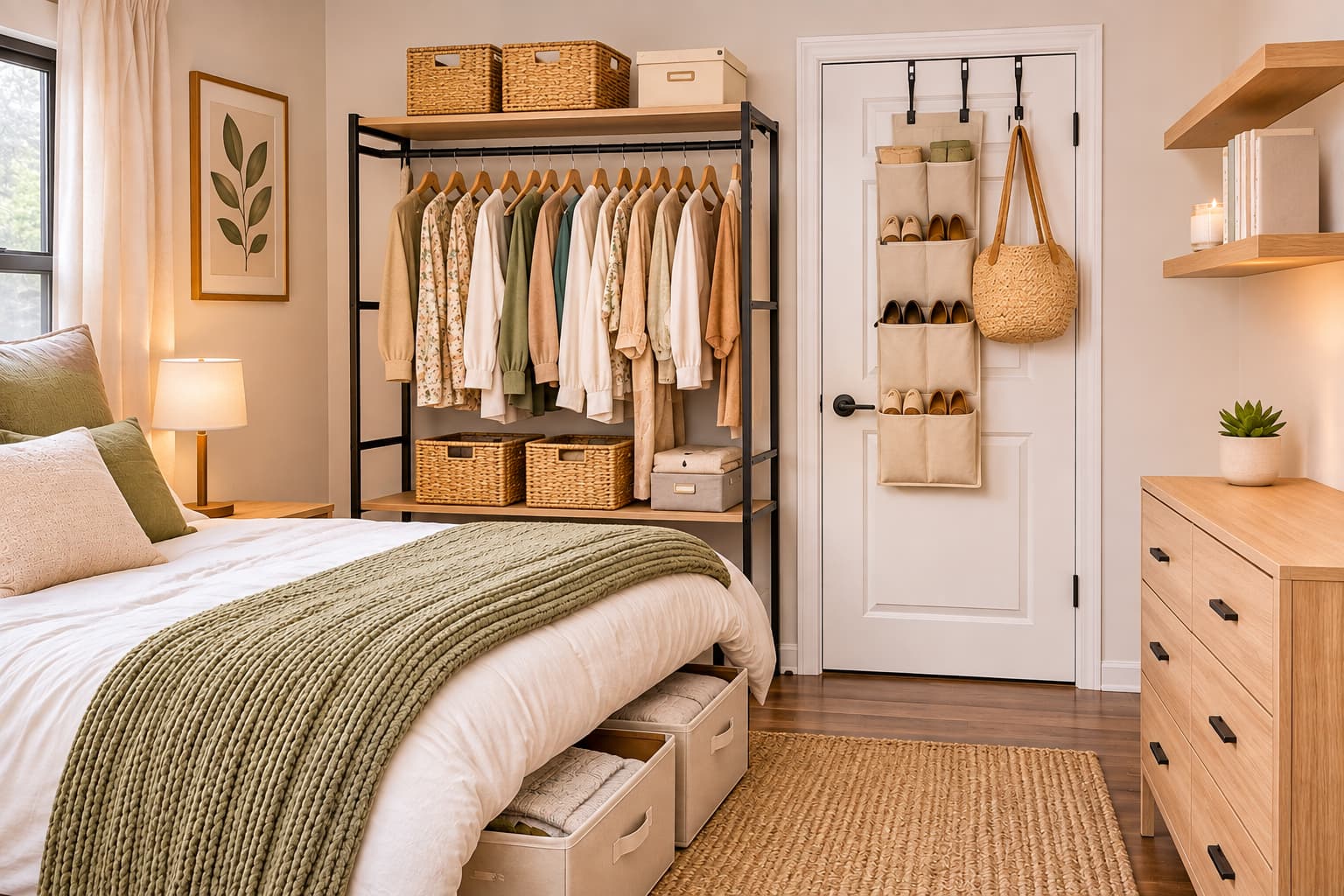
If your bedroom has no closet, a dresser that is far too small, and a chair that has quietly become a clothing mountain, you are not alone. Millions of renters and homeowners face the same problem, and most assume the only answer is an expensive wardrobe. It is not. Some of the most effective small bedroom storage ideas cost very little and use space you already have.
This guide walks through a practical, room-by-room approach that works for any bedroom, whether you are in a studio apartment, a rental with tiny closets, or an older home with no closet at all.
Why a cluttered bedroom feels so draining
Your bedroom is the first thing you see in the morning and the last thing you see at night. When clothes, shoes, and loose objects pile up, your brain registers that visual noise as unfinished work. You wake up already behind, and you end the day in a space that does not feel restful.
The good news is that clutter is rarely a size problem. In most bedrooms it is a systems problem. Items have no assigned home, so they land on the nearest surface. Fix the system and the room instantly feels bigger, calmer, and easier to live in.
Step one: walk the room and spot the wasted space
Before shopping for anything, spend ten minutes walking around your bedroom with a notebook. Look at it the way a designer would, searching for areas that are doing nothing.
Common hidden opportunities include a narrow wall beside a window, the empty zone under the bed, the back of the bedroom door, the space above the door frame, and a small corner near the dresser. Write down what you find, then list the three biggest frustrations you want to solve. A short, clear list keeps the project from feeling overwhelming and stops you from buying things you do not need.
Step two: set up an open clothing rack
A freestanding clothing rack is one of the best closet alternatives for a small bedroom. It takes up very little floor space, costs far less than a wardrobe, and can be assembled in minutes.
Place it against an unused wall and hang your most worn items first. Group shirts together, keep trousers in their own section, and put dresses at one end. Because everything is visible, getting dressed becomes faster, and you will often rediscover clothes you forgot you owned.
There is a hidden bonus here. When your wardrobe is out in the open, you naturally notice what you never wear. Set those pieces aside to donate or sell, and keep the rack limited to clothes you truly love. A lighter wardrobe is easier to keep tidy.
For a more polished look, choose a rack with a wood or matte black finish, and add matching hangers so the whole thing looks like a deliberate design choice rather than a temporary fix.
Step three: use the space under your bed
Under bed storage is the most underrated trick in small room organization. That empty gap can hold a surprising amount, and everything stays out of sight.
Use lidded storage boxes or rolling drawers to keep dust away. Assign each box one purpose, such as seasonal clothing, spare bedding, or out of season shoes. Label the ends so you can find things without pulling everything out. Clean the floor beneath the bed before you slide the boxes in, and you will also cut down on dust in the room.
If your bed frame sits low, consider bed risers. Even a few extra inches can double your usable storage.
Step four: give your shoes a real home
Shoes are one of the biggest sources of bedroom mess because they multiply quietly. The fix is to sort first and buy storage second.
Keep only the pairs you wear regularly near the door. Move special occasion and seasonal pairs into a compact shoe organizer or a box in storage. Place a small basket by the entrance to catch the daily drop items like keys, sunglasses, and chargers.
A slim shoe rack, an over the door organizer, or a narrow bench with a shelf underneath can all work, depending on your space. The goal is simple: every pair has a spot, and the floor stays clear.
Step five: use vertical space and the back of the door
When floor space is limited, go up. Walls and doors are the most overlooked storage real estate in any small bedroom.
Install a row of sturdy hooks behind the door for bags, robes, and tomorrow’s outfit. Add a floating shelf above the bed or beside the window for books and decor. Wall mounted organizers, pegboards, and hanging baskets all keep items off surfaces without taking up any floor area.
Because these solutions sit high, they also draw the eye upward, which makes a low ceiling or small room feel more open.
Step six: style with what you already own
Once the practical problems are solved, the finishing touches make the room feel personal instead of purely functional. You do not need to buy new decor. Shop your own home first.
Clear the bedside table down to the essentials, such as a lamp, one or two books, and a small plant. Frame a favorite photograph and place it on the dresser. Fold a soft throw blanket at the foot of the bed. Move a plant closer to the window where it can catch the morning light.
Edit surfaces until each one holds only a few meaningful items. Empty space is not wasted space. It is what lets the eye rest and gives the room its calm feeling.
A quick weekend plan
If you want to tackle everything without burning out, spread the work over a few short sessions.
On the first day, walk the room, make your notes, and declutter clothes you no longer wear. On the second day, set up the clothing rack and organize what stays. On the third day, handle under bed storage and shoes. Finish by styling the surfaces and adding hooks or shelves where you need them.
Each session should take an hour or two, and every one gives you a visible win that keeps you motivated.
Common mistakes to avoid
Buying storage before decluttering is the most common trap, because you end up organizing things you should have let go of. Choosing bulky furniture for a small room is another, since it shrinks the space further. Skipping labels often leads to boxes that nobody can navigate. And trying to fix the entire room in a single day usually ends in a bigger mess than you started with.
Work in small steps, finish each one, and keep what you own proportional to the space you have.
The bigger lesson
A bedroom does not need to be large, new, or expensively furnished to feel comfortable. It needs to work for the person living in it. When every item has a home, the floor is clear, and the surfaces hold only what you love, even a small room with no closet can feel calm and complete.
You do not have to renovate or buy a wardrobe. You just need a fresh look at the space you already have, and the willingness to fix it one corner at a time.
- Shoe Storage Ideas for Small Closets That Actually Work
- How to Organize Your Fridge Like a Pro: Easy Shelf Guide
- DIY Fluted Wall Ideas for a Modern Home: 9 Stylish Makeover Ideas
- 12 Stunning DIY Home Improvements Inspired by Horses and the Stable
- How to Make an Easy and Charming Rustic Cottage Key and Mail Holder

Leave a Reply